
Before the Model Comes the Mission
The Conceptual Foundation
Edith A. Hughes, D.Sc. · Adaptive Value Design LLC · 2026
I. The Foundation the Model Requires
Across the federal government, the product operating model is gaining recognition as the right framework for modern mission delivery. Policy and research organizations are publishing frameworks. Consultants are proposing transformations. Agency executives are hearing the term in briefings, at conferences, and in strategic planning conversations. The language of empowered teams, continuous delivery, and product thinking is spreading quickly.
Yet implementation is not keeping pace. The gap between discussing a product operating model and successfully putting one into practice is wide, and the reason is consistent: agencies are reaching for a model before they have answered the question the model is meant to address. What public value are we here to deliver, and to whom?
That question sounds simple. It is not. Moving straight from “we need to transform how we operate” to “let’s adopt a product operating model” bypasses a foundational step, one that determines whether the transformation addresses structural misalignment or leaves it intact.
The Niskanen Center has done important work examining how government should deliver digital services, including a compelling case for product-oriented teams and the role of product managers in aligning agencies around user needs. That work is right. This series builds on it by going upstream, to the question that makes product-oriented alignment possible. Before product teams can align around user needs, leaders need to collectively define, quantify, and own what “user needs” means in the context of their federal mission. In most agencies, they haven’t.
This series is about that missing foundation.
II. Value is Defined by Those Who Receive It
Warren Buffett has a useful distinction: price is what you pay, value is what you get. In the private sector, that definition is relatively straightforward. In federal government, it is considerably more complex. No market price signal exists. No single customer exists. The people who fund the work are rarely the people who receive the benefits.
This complexity is why federal leaders need to deliberate on the definition of value and develop a stronger understanding of who their customers are.
Any flow of delivering value involves three distinct categories of customers, each containing multiple specific roles. The first category is Consumers: the end users or beneficiaries who directly receive the service, and the brokers or intermediaries who operate on their behalf. When a taxpayer files their return through TurboTax or H&R Block, both the taxpayer and the tax preparation company are consumers of the IRS’s value stream. The second category is Producers: the frontline employees who interact directly with customers, back-stage employees who support service delivery behind the scenes, and the external partners, suppliers, and contractors who enable it. The third category is Approvers, and this category is where federal complexity is most acute. Approvers operate at two levels simultaneously: externally, they include Congress and the oversight bodies that provide authorization, legal guardrails, and appropriate funding; internally, they include the executives who authorize investment decisions and the oversight functions that govern how the organization operates.
Most federal transformation efforts focus almost exclusively on end users, the most visible consumer role. That focus is correct but incomplete. Leaders who haven’t mapped all three customer categories, and the specific roles within each, are designing an operating model around a partial picture of the value they’re responsible for delivering.
Identifying these roles is not a desk exercise. The Customer Roles Framework is a design framework that enables federal leaders to answer the question together. That collaborative act of mapping customers to a shared value stream is itself the beginning of alignment. For now, the point is that defining value starts with knowing, precisely and collectively, who you are delivering it to and why.
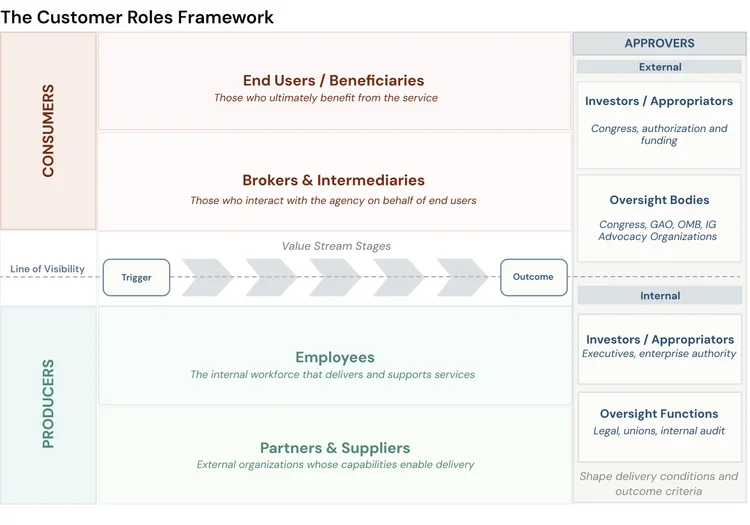
Figure 1: The Customer Roles Framework. Original design: Edith A. Hughes, D.Sc. © MITRE Corporation. Used with permission.
III. Value Streams, Not Products
Understanding who your customers are is necessary, but it is not sufficient. Leaders also need to understand how value flows to those customers. That requires a different kind of thinking than most federal transformation efforts apply.
The agile term commonly used for this core concept is “value stream”: the series of steps between a trigger or need and the end outcome. In practice, most discussions of value streams in government tend to focus narrowly on software development: the pipeline from requirements to code to deployment of a digital product or platform. That framing is not wrong, but it is incomplete in a way that matters enormously for federal agencies.
Federal government delivers mission value primarily through service delivery: the series of interactions and steps between producers and consumers to co-create value. When a taxpayer calls the IRS with a question, or when they file their taxes, they are not receiving a “product”; they move through a sequence of touchpoints — filing, processing, correspondence, resolution — that involve people, systems, policy, and judgment at every stage. Software fits into and enables that flow. It is not the whole flow.
It is important to note that value streams extend well beyond citizen-facing services. Every value stream, in any part of an organization, serves customers. A human resources organization delivers value to the employees and managers who depend on it. A finance function delivers value to the leaders making investment decisions. An IT organization delivers value to the mission teams it enables. The question “who are our customers and what do they need?” applies universally, and organizations that cannot answer it are not yet ready to design the value streams that serve them.
Value streams are not simply “products” or service journeys. They are any coherent series of steps through which an organization produces value, whether the result is an outcome for a citizen, a decision for an executive, or a capability for a mission team. This distinction has a direct consequence for how agencies think about their operating model. When leaders focus on agile delivery as a software problem, they will design a software solution. When they frame it as an integrated service delivery system — one in which technology is a critical enabler but not the whole answer — they will design something capable of improving the actual experience of the people who together co-create the value.
This is why the language federal agencies use to describe what they are organizing around matters more than it might appear. When agencies adopt a “Product Operating Model,” the word “product” quietly anchors thinking in outputs: a thing built, a capability deployed, a feature released. Replacing that word with “value stream” forces a different question: what is the end-to-end flow of delivering value to our customers, and are we organized to optimize it? That change is not simply cosmetic. It is a forcing function that makes the right questions unavoidable from the start.
Replacing “Product Operating Model” with “value stream” focuses on a more useful question: what is the end-to-end flow of delivering value to our customers, and are we organized to improve it?
IV. A Framework with a Focus on Value
Defining value, mapping customers, and understanding the flow of delivering value are not tasks that any single executive can accomplish alone. They require a leadership team that can see the whole system and that is willing to own it together.
An operating model describes how an organization works together to deliver value. The critical word is “together.” An operating model is not an org chart, a technology architecture, or a set of delivery practices optimized in isolation. It has multiple elements that leaders need to design and implement so that each element integrates effectively and complements the other in execution. It is the system that connects all those things, and it works best when leaders share a common understanding of how those elements impact each other.
The Public Value Aperture is a framework for thinking about the design of that system. It defines an operating model as six interlocking elements: Mission Domains & Strategy, Customer Insight, Organization Design, Service Delivery, Technology Enablement, and Measures, arranged like the blades of a camera aperture. The metaphor is deliberate. A camera aperture works as a system of interlocking blades that must all align to control the flow of light. No single blade produces the image. They work together or they fail together.
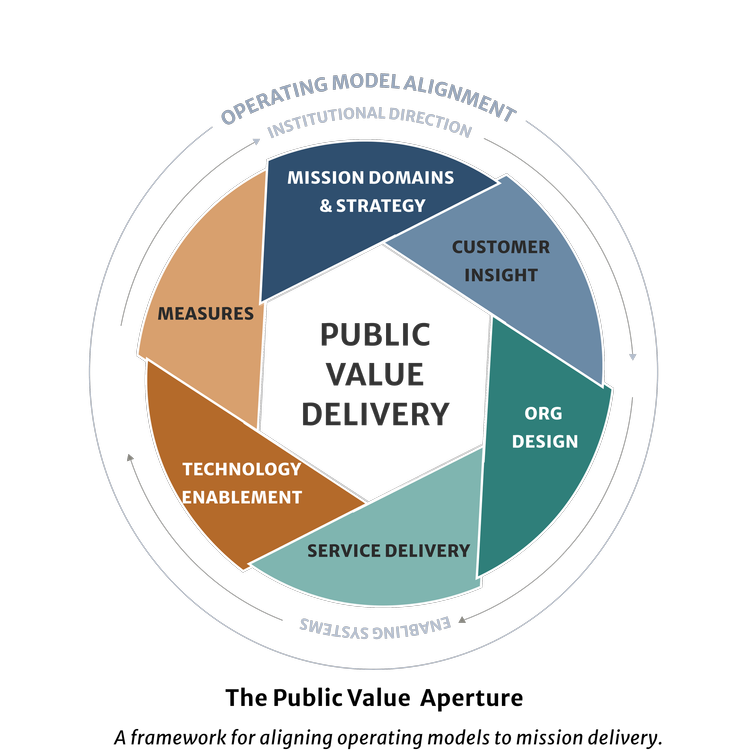
Figure 2: Public Value Aperture — a framework for aligning operating model elements to deliver public value
The six elements are grouped into two sets: Mission Domains & Strategy, Customer Insight, and Measures form the Institutional Direction. These elements define value in context of the mission, grounded in a solid understanding of customer needs, and establish measures of performance in delivering that value. Organization Design, Service Delivery, and Technology Enablement work together as the Enabling Systems that deliver the value.
That grouping is not arbitrary. It is the main point of this series in visual form: value must be defined before the model can align to it.
V. The Leadership Imperative
This work requires deliberate leadership action. Someone has to convene it, drive it, and own the result. In a federal agency, that someone is the executive leadership team, working together. This leadership imperative sits at the center of this series: federal executives need to work as a team to define, and identify quantitative measures for, value at an enterprise level. Then they need to develop a shared understanding of the system of systems they jointly manage to deliver that value. Those two steps, in that sequence, are what make everything else possible. Without them, an operating model transformation is a reorganization with better branding.
That may sound straightforward. It is not. Most federal executive teams were not built for this kind of collaborative work. Senior leaders are typically appointed to manage a function: a program office, a technology organization, a mission support division. They are accountable for their piece. They are rarely held accountable for the whole. The whole is precisely what an enterprise operating model requires them to see, agree on, and own together.
Defining value at an enterprise level is not a technical exercise. It is a leadership one. It requires executives to sit in the same room, look at the same picture of their customers and their core mission value flow, and reach a shared conclusion about what they are collectively responsible for delivering and how they will know when they are delivering it.
Achieving that alignment is harder than it sounds. It is also the only foundation on which a well-aligned operating model can be built.
VI. Before the Model, the Mission
Federal agencies have invested heavily in technology modernization over the past two decades. Many of those efforts have delivered real improvements: new systems, faster processing, and better digital interfaces. But technology modernization alone has consistently fallen short of the deeper transformation agencies need, because it addresses only one element of a sociotechnical challenge. Upgrading systems without aligning the organizational structures, authorities and accountabilities, and physical architecture that surround them updates the technology inside the same dysfunction.
The product operating model represents a genuine advance on that pattern. It is attracting serious attention as a leading practice precisely because it reaches beyond technology, toward empowered teams, continuous delivery, and alignment around user needs. That promise is real. Realizing it fully requires one additional layer of foundation. Empowered product teams need a shared definition of value to align to. Value streams need to be derived from a shared understanding of what the core mission is, who the customers are, and how service flows to them.
No amount of agile delivery will compensate for a leadership team that has never agreed on what it is delivering.
Before the model comes the mission. Before the value stream comes defining the value. Before the transformation can begin, the leadership team must do the hardest work first: sitting together to define their mission and its core activities, map their customers, trace their service delivery flow, and define a shared, quantified understanding of what public value they exist to deliver.
That work is not technical. It is a leadership imperative, and it is the foundation that makes everything else possible.
Defining mission value must come first. Everything else follows from it.
The articles that follow examine what happens when leaders do the foundational work and what happens when they don’t. They explore why federal executives struggle to function as an enterprise team, how deliberate leadership engagement can build alignment while solving a real problem, and why the structural alignment of business domains, authority with accountabilities, and architecture is the missing piece that makes everything else hold. The Public Value Aperture is the thread that runs through all of it: a reminder that the elements of an operating model work best when they are designed to work together and focus on a shared definition of value.
© 2026 Adaptive Value Design LLC · Value-First Imperative Series · Article 1 of 5
In This Article
Practitioner Tools
The Series